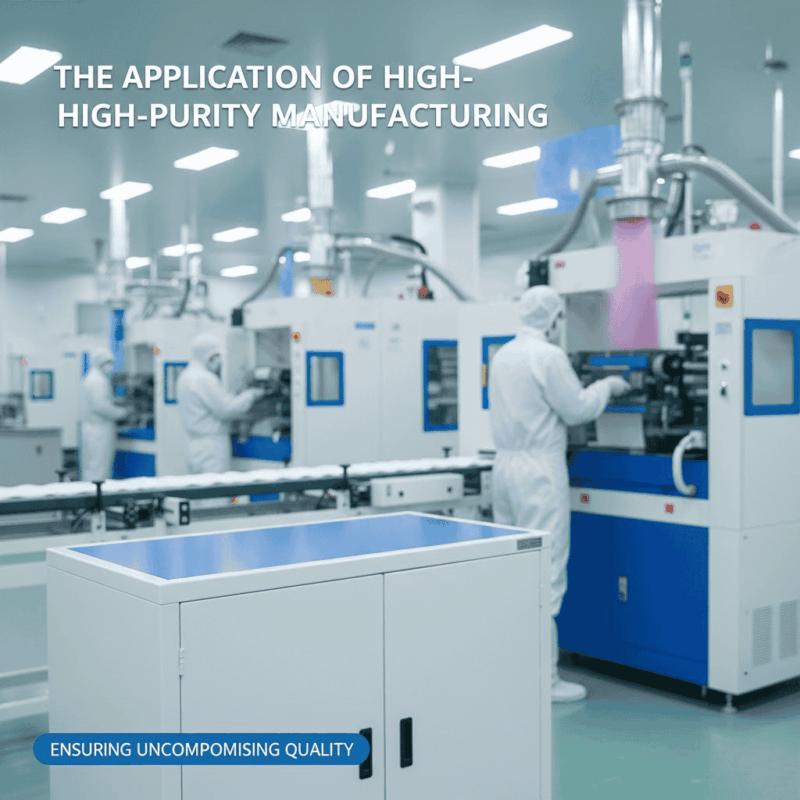
The global shift toward sustainable energy has placed the lithium-ion battery industry at the forefront of industrial innovation. As demand for electric vehicles (EVs) and energy storage systems (ESS) skyrockets, the manufacturing process has come under intense scrutiny.
In the complex production line of a lithium battery, every detail matters. One critical component ensuring operational excellence is the Pulse Valve. Specifically designed for dust collection systems, pulse valves act as the “heartbeat” of filtration, maintaining the ultra-pure environment required for high-capacity batteries.
1. The Critical Role of Dust Collection in Lithium Battery Production
In lithium battery manufacturing, “dust” isn’t just a nuisance; it’s a potential catastrophic failure. Microscopic particles can compromise cell integrity, leading to:
- Preventing Internal Short Circuits: Fine metallic dust can settle on electrodes, leading to dendrite growth.
- Ensuring Chemical Purity: Contaminants alter the electrochemical properties of materials, reducing cycle life.
- Worker Safety: Handling lithium salts and cobalt requires strict inhalation hazard control.
The Pulse Valve controls the compressed air that cleans filter bags, ensuring the dust collector runs at 100% efficiency without clogging.
2. Watch: Advanced Pulse Valve Technology in Action
To better understand how these components integrate into a modern production line, watch this technical overview:
3. The “Copper and Zinc-Free” Revolution
Standard industrial pulse valves are often made of brass or zinc alloys. However, in the New Energy Lithium Battery Industry, these materials are strictly forbidden in specific production zones.
The Danger of Copper (Cu) and Zinc (Zn)
Lithium metal is chemically active. If copper or zinc particles enter the battery slurry, they undergo a redox reaction resulting in:
- Dendrite Formation: Metallic crystals grow and pierce the battery separator.
- Thermal Runaway: Once the separator is breached, an internal short circuit potentially leads to fire or explosion.
The Xiechang Solution: A360 & 316L Engineering
To meet the stringent “No Copper, No Zinc” requirements, Xiechang provides specialized valves using A360 Aluminum Alloy (with specialized surface treatment) and full 316L Stainless Steel. These materials offer:
- Surface Passivation: Ensures no metallic ions are released into the airflow.
- Corrosion Resistance: Protects against the NMP (N-Methyl-2-pyrrolidone) vapors common in coating processes.
4. Explosion-Proof Safety in Hazardous Dust Areas
Lithium dust is not only a contamination risk but also highly combustible. In the mixing and crushing stages, the risk of dust explosion is significant.
- Ex-Proof Compliance: Pulse valves used in these sections must be ATEX or IECEx certified.
- Encapsulated Solenoids: Our specialized series features flameproof enclosures (Ex d IIB T4) to prevent any electrical spark from igniting the ambient dust.
5. Technical Specifications: Lithium-Grade vs. Standard Valves
| Feature | Lithium Industry Grade | Standard Industrial Grade |
|---|---|---|
| Material | 316L SS / A360 Aluminum | Brass / Zinc Alloy |
| Heavy Metals | Cu-Free & Zn-Free | Contains Cu/Zn |
| Diaphragm Life | 1 Million + Cycles | 500,000 Cycles |
| Response Time | Fast (<0.08s) | Standard (<0.15s) |
| Certifications | ATEX, CE, IP66 | CE, IP65 |
6. Conclusion: Investing in Future-Proof Filtration
Selecting a pulse valve for the lithium-ion battery sector is about more than air pressure—it’s about product purity, plant safety, and maintenance uptime. By choosing Xiechang’s specialized Cu-Free and Zn-Free pulse valves, you are protecting your battery’s performance and your facility’s safety.
Ready to upgrade your lithium production line? Consult with our technical engineers for a customized dust collection solution.