Watson® pulse valve Technical Encyclopedia (Full Series)
▶1. Watson® Heritage & Xiechang® Asia-Pacific General Partnership
Watson Process Systems was incorporated in 1983 as a joint venture with Germany’s GVD. In 1986, Watson® took over GVD’s interests and significantly expanded its baghouse pulse valve jet technology. Xiechang Environmental Protection has collaborated with Watson® for many years and is now the Asia-Pacific General Agent, responsible for distributing original Watson® high-end pulse jet technology throughout the region.
▶2. Watson® pulse valve Universal Operating Specifications
| Working Medium | Clean Air |
|---|---|
| Power Supply | DC24V (AC 220V/50Hz to 240V/60Hz) |
| Class of Protection | IP65 |
| Working Environment | Normal: -20°C to 80°C / High-Temp: 55°C to 180°C |
| Relative Humidity | ≤ 85% |
▶3. Watson® pulse valve Selection Matrix (Full Series)
| Model No. | DN | Inch | Connection / Thread Spec | Diaphragm |
|---|---|---|---|---|
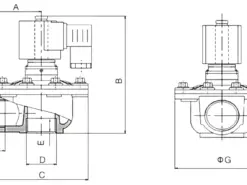
| WPS-CA/TG20 | 20 | 3/4″ | Right-Angle / G3/4″ | Single |
| WPS-CA/TG25 | 25 | 1″ | Right-Angle / G1″ | Single |
| WPS-CA/TG40 | 40 | 1 1/2″ | Right-Angle / G1 1/2″ | Double |
| WPS-CA/TG50 | 50 | 2″ | Right-Angle / G2″ | Double |
| WPS-CA/TG62 | 65 | 2 1/2″ | Right-Angle / G2 1/2″ | Double |
| WPS-CA/TG76 | 76 | 3″ | Right-Angle / G3″ | Double |
| WPS-CA/TD20 | 20 | 3/4″ | Threaded Nut / G1 1/4″ | Single |
| WPS-CA/TD25 | 25 | 1″ | Threaded Nut / G1 3/4″ | Single |
| WPS-CA/TD40 | 40 | 1 1/2″ | Threaded Nut / G2 2/4″ | Double |
| WPS-CA/EG25 | 25 | 1″ | Submerged / G1″ Threaded | Single |
| WPS-CA/EG40 | 40 | 1 1/2″ | Submerged / G1 1/2″ Threaded | Double |
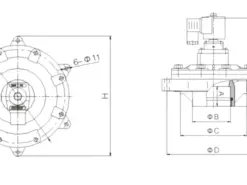
| WPS-CA/EP50 | 50 | 2″ | Submerged / Slip-on | Double |
| WPS-CA/EP62 | 65 | 2 1/2″ | Submerged / Slip-on | Double |
| WPS-CA/EP76 | 80 | 3″ | Submerged / Slip-on | Double |
| WPS-CA/EP102.B | 90 | 3.5″ | Submerged / Slip-on | Double |
| WPS-CA/EP102 | 100 | 4″ | Submerged / Slip-on | Double |
| WPS-CA/EP115 | 115 | 4 1/2″ | Submerged / Slip-on | Double |
| WPS-CA/EP200 | 200 | 8″ | Submerged / Slip-on | Double |
| WPS-CA/EP250 | 250 | 10″ | Submerged / Slip-on | Double |
| WPS-CA/EP300 | 300 | 12″ | Submerged / Slip-on | Double |
| WPS-CA/EP350 | 350 | 14″ | Submerged / Slip-on | Double |
| WPS-CA/EP400 | 400 | 16″ | Submerged / Slip-on | Double |
▶4. What is the Watson® pulse valve?
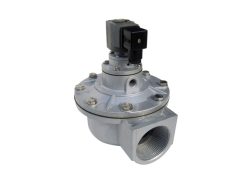
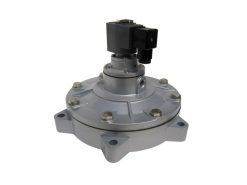
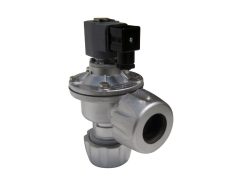
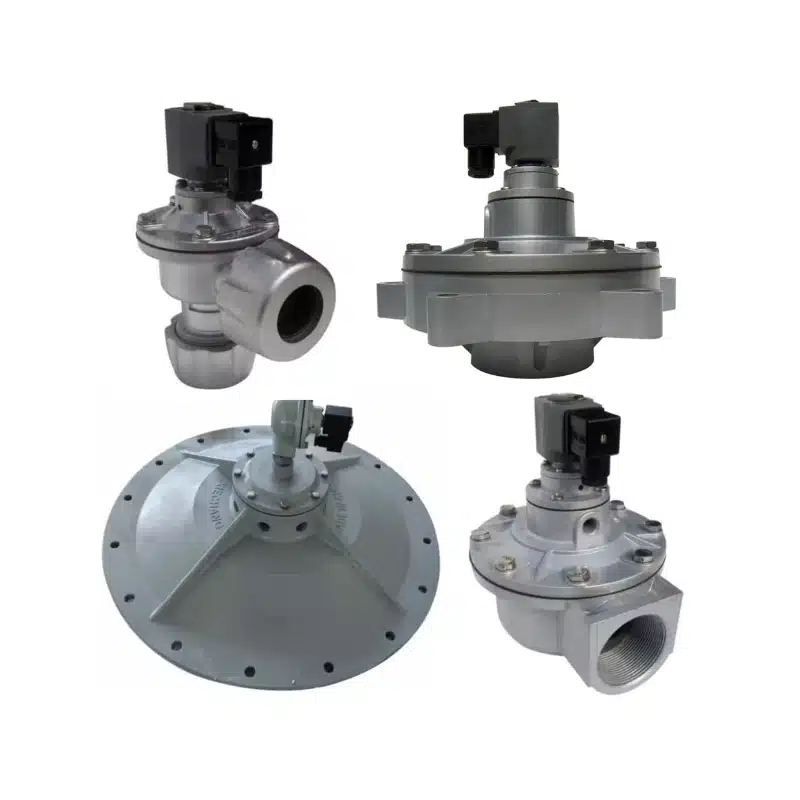
The Watson® pulse valve is a high-performance jet valve engineered for precision cleaning in baghouse pulse valve systems. Available in right-angle threaded, threaded nut, and submerged slip-on configurations, these valves are designed to release a high-velocity air pulse that dislodges dust cakes with maximum efficiency and minimal compressed air consumption.
▶5. Watson® vs. Xiechang®: Technical Synergy
While the Xiechang® pulse valve is the industry standard for reliable dust collection, the Watson® series is the premium choice for extreme conditions. Watson® pulse valves utilize advanced diaphragm materials capable of continuous operation up to 180°C and reinforced body designs that provide a longer service life in high-cycle, high-pressure industrial environments.
▶6. Key Engineering Advantages
- High Airflow Velocity: Internal geometry optimized to reduce turbulence and maximize peak pressure.
- Extended Diaphragm Life: Proprietary elastomers ensure millions of pulses without failure.
- Size Versatility: A complete range from DN20 (3/4″) up to DN400 (16″) to meet any filtration requirement.
▶7. Installation & Maintenance Considerations
For Watson® pulse valve slip-on models (EP/EG), ensure the blowpipe surface is smooth and the O-ring is properly seated for a leak-free seal. For threaded models (TG/TD), use high-quality thread sealant. Regular inspection of the diaphragm is recommended to maintain optimal baghouse pulse valve performance.
▶8. Primary Applications for Watson® pulse valve
Watson® pulse valves are the global benchmark for Baghouse Pulse Valve technology in heavy industries such as Power Plants, Cement Manufacturing, Steel Smelting, and Waste-to-Energy facilities. They are the preferred choice for engineers prioritizing durability and high-temperature resistance.